What exactly do I get?
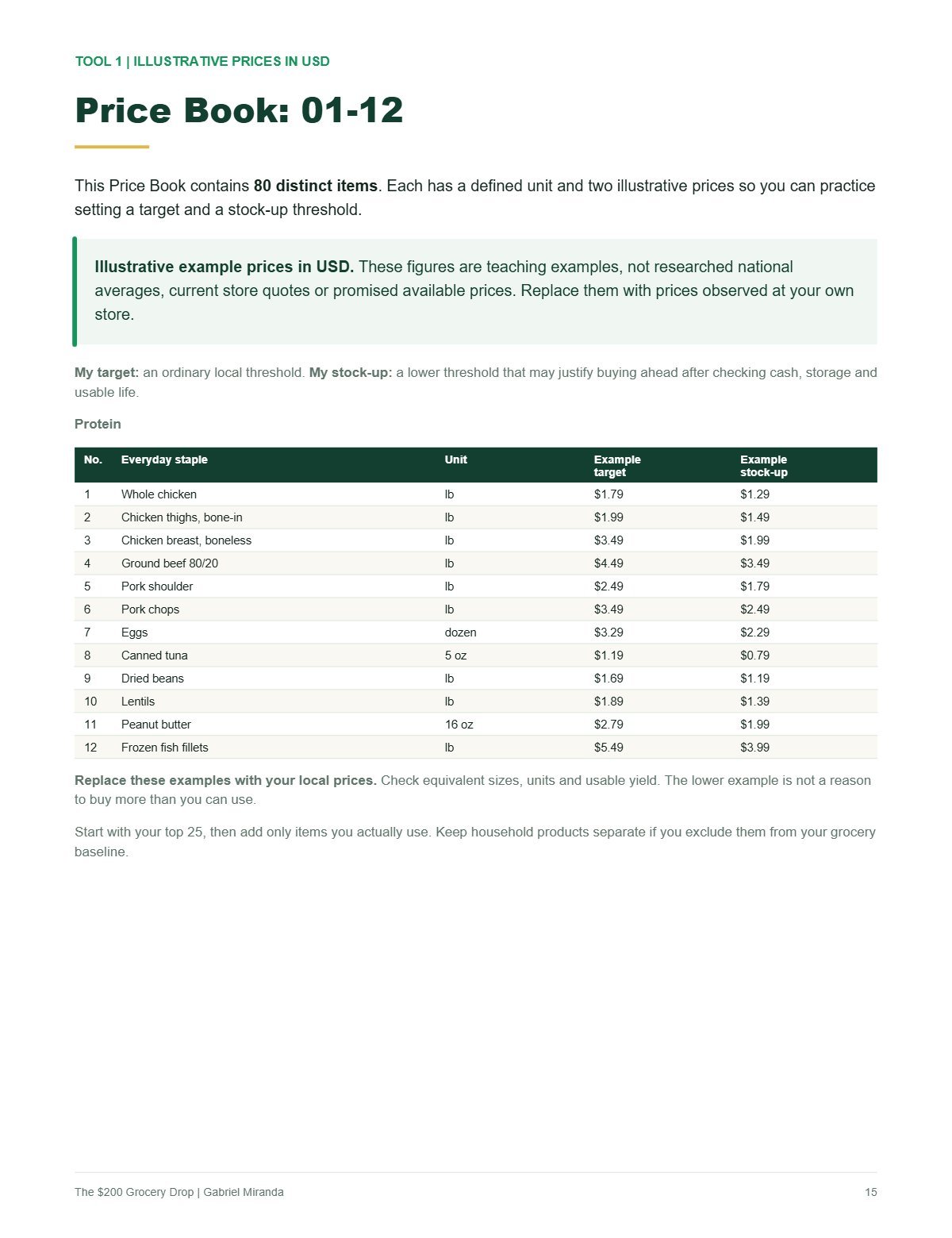
A 26-page PDF guide: the 30-Day Grocery Drop System plus six tools — the 80-Item Price Book,
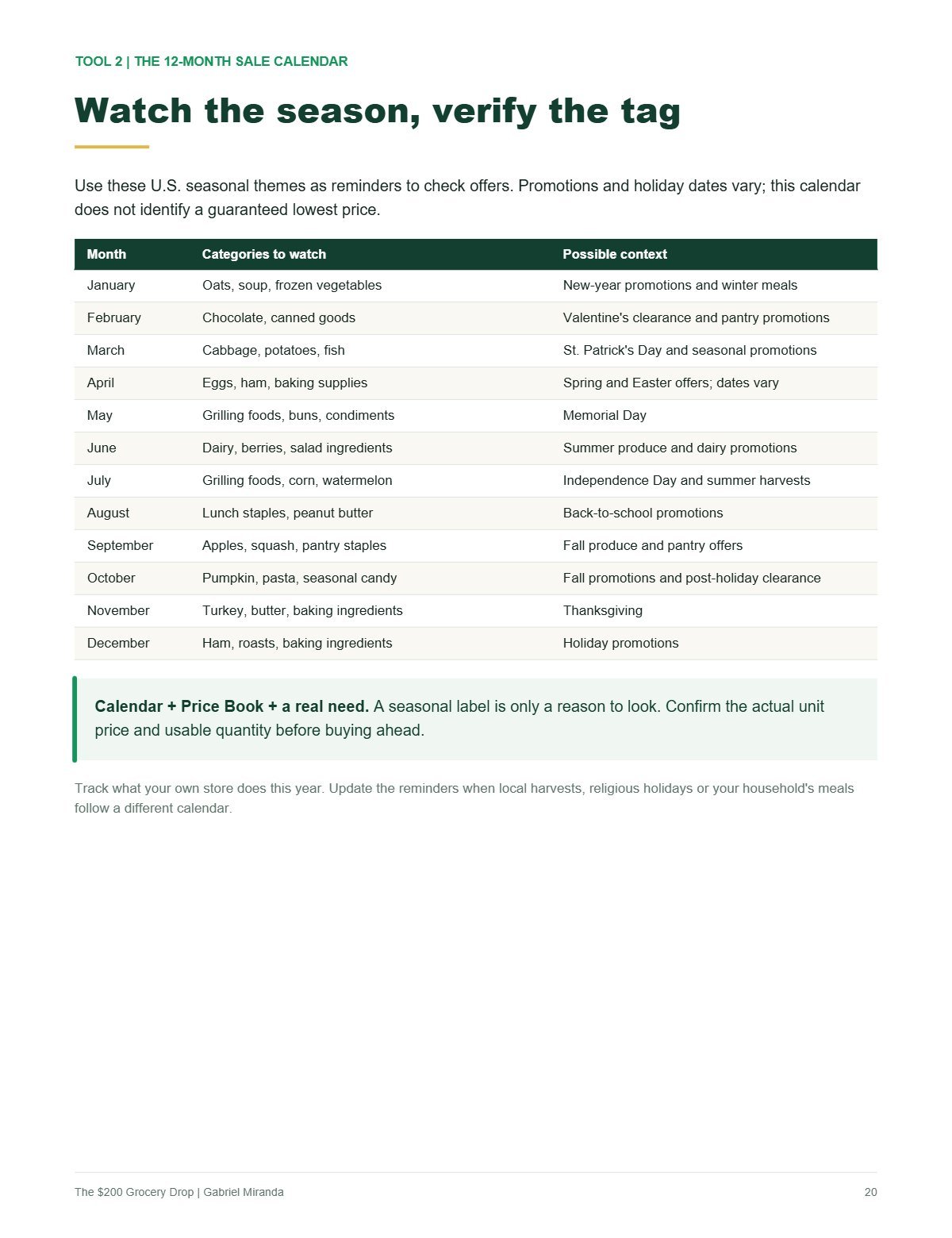
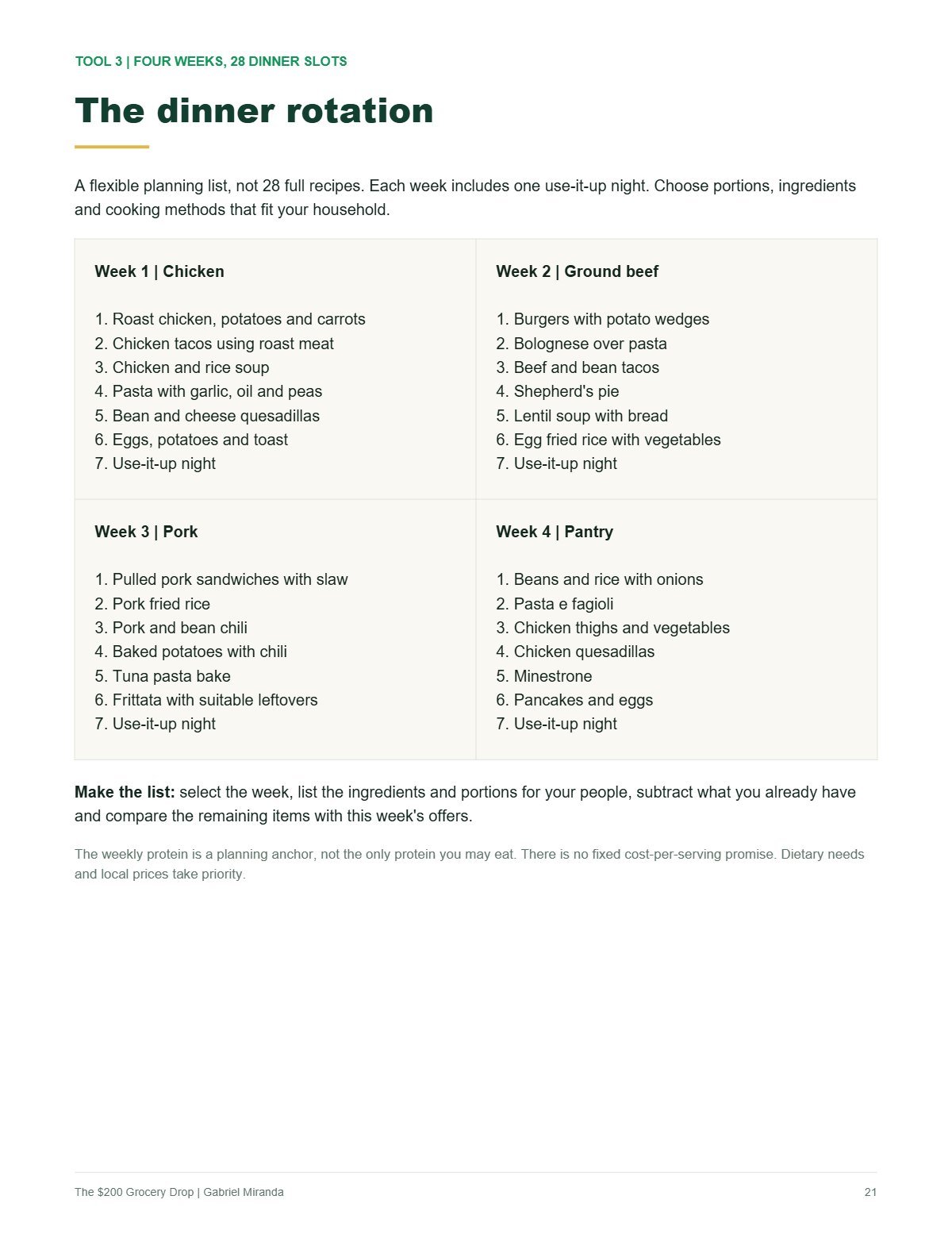
12-Month Sale Calendar, 4-Week Dinner Rotation (28 dinner slots), 50 Smart Swaps, Stretch Playbook and Pantry
Blueprint. The dinner tools are meal ideas and planning tables, not full recipes or shopping lists with
quantities. Read it on your phone, tablet or computer, or print it.
How do I get access?
Right after checkout you'll get an email from Hotmart with your access link — usually within
a few minutes. Nothing is shipped. Don't see it? Check spam, then use the
contact page and we'll sort it out.
Is this a subscription?
No. One payment of $17. Nothing renews and there's nothing to cancel.
How much will I save?
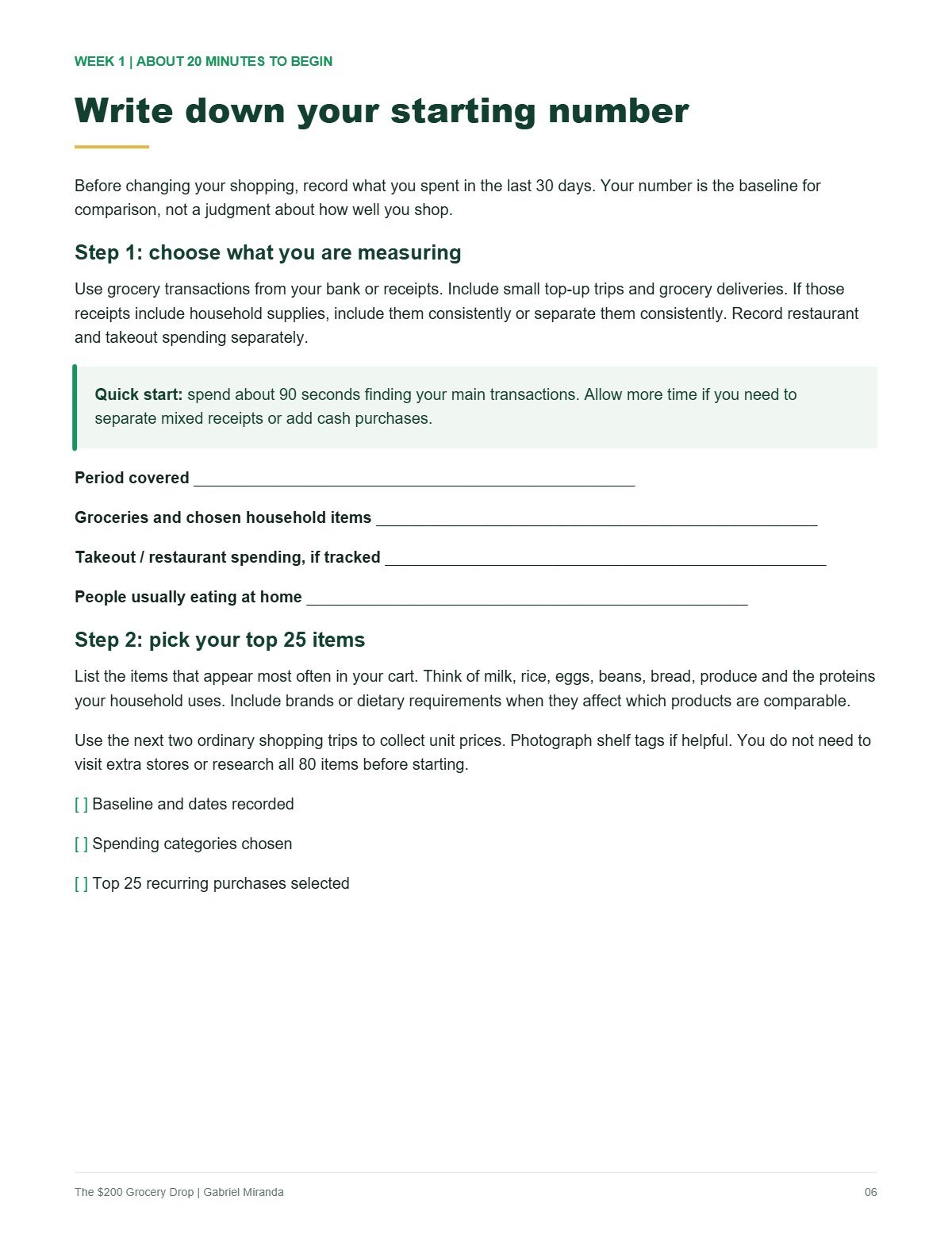
It depends on what you spend now, where you shop, what your household eats and how many habits
you keep. The "$200" in the name is a goal, not a guarantee, and we don't promise a specific number. You
write down your starting number in Week 1 and measure your own result on Day 30.
Do I need coupons or an app?
No. No clipping, no scanning and nothing to install — just your store's weekly circular,
your phone camera and the guide.
How much time does it take?
About 20 minutes in Week 1, then a few minutes a week. The swaps happen during a shopping trip you
were already making.
Will my family notice?
You're changing how you buy, not what's for dinner. With one swap per trip, if anyone notices
something, you switch that single item back.
Does it work for small households and big families?
Yes. The habits work the same way at any size. Bigger grocery bills usually have more to
close; smaller households benefit most from stretching and a small pantry.
Do I need a specific store?
No. It works at the store you already use — no driving to four stores.
Is this financial advice?
No. It's a practical guide to grocery shopping habits, not investment, credit or financial
advice.
 Enlarge
 Enlarge
 Enlarge
 Enlarge